
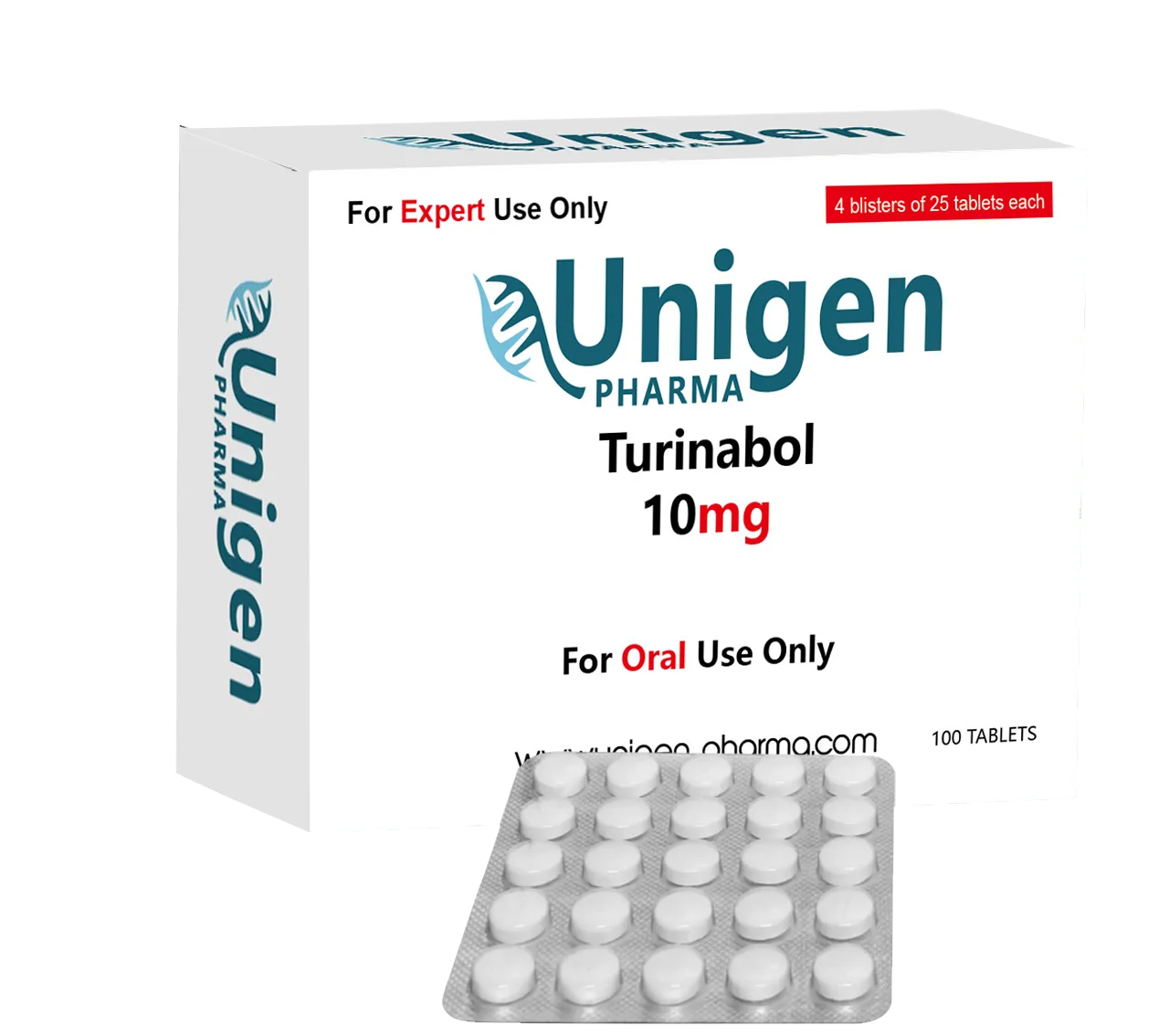
Description
Unigen Turinabol is a branded formulation of Dehydrochloromethyltestosterone (DHCMT). People often call it Oral Turinabol®. The East German pharmaceutical company Jenapharm first developed it in the 1960s. This compound is an orally active anabolic-androgenic steroid (AAS). It is a derivative of testosterone. Its structure includes a 17α-alkylated group. This modification allows for oral administration. However, this structure also places stress on the liver. This note provides a comprehensive overview. It covers chemical identity and clinical history. It also addresses critical safety and legal considerations.
Chemical Identity and Mechanism
Chemical Identity
Turinabol has a chemical formula of C20H27ClO2. Its molecular weight is 334.8854 g/mol. A key feature is the 4-chloro alteration. This alteration prevents interaction with the aromatase enzyme. Consequently, estrogenic side effects are not a concern. It also prevents conversion to a dihydro form. The drug is a Schedule III controlled substance in the U.S. Its CAS number for the base compound is 2446-23-3.
Pharmacological Action
Turinabol acts as an androgen receptor agonist. Its anabolic effect is approximately 53. Its androgenic effect is between 0 to 6. Therefore, it is considered relatively mild. It promotes protein synthesis and nitrogen retention. Additionally, it lacks estrogenic properties. Consequently, users often report a “hard” look.
Clinical History and Research Applications
Historical Context
Jenapharm developed Turinabol in the 1960s. They created it for recovery after major surgeries. Shortly after its introduction, athletes widely misused it. The German Democratic Republic used it in a systematic doping program. This continued until their collapse. The drug became infamous for providing quality muscle and strength gains. Its effects are slower than some other steroids. Nevertheless, the gains are considered “quality” gains.
Research and Therapeutic Potential
A 2026 review summarized its potential therapeutic benefits. These include muscle wasting and osteoporosis. Researchers have also studied it for liver diseases. Additionally, they have examined it for post-surgical recovery. It enhances protein synthesis and tissue hypertrophy. These effects occur in muscle, heart, and liver tissues. Furthermore, it showed positive effects in pediatric patients. It has also shown benefits in post-surgical populations. Moreover, it prevents muscle atrophy due to corticosteroid treatment. Nevertheless, newer anabolic steroids have largely replaced it in clinical use.
Anti-Doping and Detection
WADA Prohibition
The World Anti-Doping Agency prohibits Turinabol at all times. It is classified as an anabolic androgenic steroid in class S1. Despite this, anti-doping laboratories report several findings each year.
Long-Term Detection
Research has dramatically improved detection windows. Scientists proposed new long-term metabolites in 2011/12. These resulted in adverse findings in retests of the 2008 and 2012 Olympic Games. A controlled administration study provided key data. Researchers administered a single 5 mg oral dose to volunteers. They collected urine samples for 60 days. The metabolite M3 is a suitable long-term marker. In one volunteer, it was detectable for 45 days after a single dose. Additionally, the metabolite epiM4 serves as an additional confirmatory marker.
Severe Safety Concerns
Hepatotoxicity
Turinabol is 17α-alkylated. This modification makes it hepatotoxic. The liver cannot easily break it down. Therefore, higher doses elevate liver enzymes. Consequently, usage should be limited to about six weeks. This helps to avoid damage.
Adverse Effects
Reported side effects include muscle tightness. Acne is also common. Functional liver damage is a risk. In women, amenorrhea can occur. Documented cases show severe, irreversible side effects. A teenage world record holder experienced hirsutism. She also had steroid acne on her body trunk. Additionally, she had pubic hair extending to her navel. These effects are often irreversible. Other risks include cardiovascular issues. These may include hypertension and increased blood volume. Psychiatric disorders are also associated.
Legal Status
Controlled Substance Status
In the United States, Turinabol is a Schedule III controlled substance. In the UK, it is a prescription-only medicine (POM). Therefore, it cannot be legally sold as a dietary supplement.
Regulatory Status in China
In China, Turinabol is a prescription-only preparation. It is classified as a protein anabolic preparation. Strict regulations govern its import and export. The “Protein Anabolic Agents and Peptide Hormones Import and Export Management Measures” apply. Consequently, illegal production or sale can constitute a criminal offense.
Internal and External Links
Internal Resources
Visit our Research Chemical Library for related androgens. Explore our Guide to Anabolic Steroids. Review our Safety Protocols and Regulatory Compliance FAQ.
External Resources
-
[ScienceDirect]: Access the 2021 controlled administration study at ScienceDirect.
-
[NIH/MeSH]: View chemical data at NIH.
-
[Bionity]: Find chemical information at Bionity.
-
[BSCG]: Read about supplement contamination at BSCG.
-
[WADA]: Check the prohibited list at WADA.


Reviews
There are no reviews yet.